
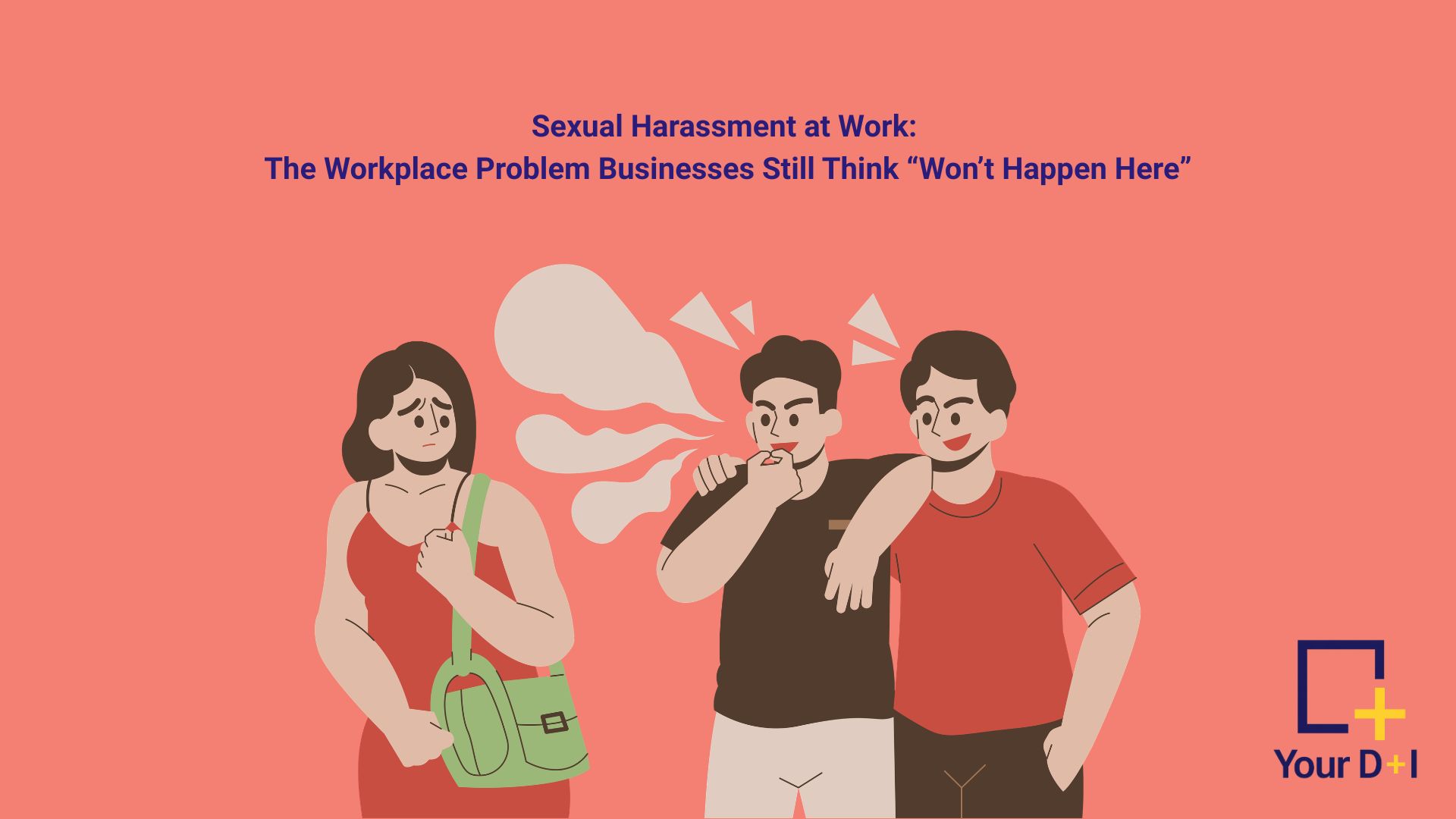
Sexual Harassment at work.
Most businesses believe they would recognise workplace sexual harassment if it happened but the reality?
A lot of it gets normalised long before anyone reports it. It gets dismissed as:
- “just joking”
- “office culture”
- “they didn’t mean it”
- “that’s just their personality”
- “everyone laughs”
- “they’re old school”
- “it was only a comment”
And that is exactly where many organisations get themselves into trouble.
Because sexual harassment in the workplace is not always loud, obvious or dramatic. Often it builds slowly through behaviours that people have become desensitised to over time.
Since the Worker Protection (Amendment of Equality Act 2010) Act came into force in October 2024, employers now have a legal duty to take reasonable steps to prevent sexual harassment before it happens. (equalityhumanrights.com)
That means businesses should no longer rely on:
- reactive HR processes
- outdated policies
- or hoping employees will simply “speak up.”
What Counts as Sexual Harassment at Work?
Under the Equality Act 2010, sexual harassment is:
Unwanted conduct of a sexual nature that violates someone’s dignity or creates an intimidating, hostile, degrading, humiliating or offensive environment. (legislation.gov.uk)
That can include:
- sexual jokes or comments
- inappropriate touching
- repeated comments about appearance
- intrusive questions about relationships or sex lives
- sexual messages or memes
- unwanted flirting
- suggestive remarks
- “banter” used to mask degrading behaviour
- comments at work socials
- behaviour in WhatsApp or Teams chats
- repeated behaviour someone has already said makes them uncomfortable
And importantly: intent does not cancel impact.
That does not mean all workplace humour is a problem. Healthy humour, camaraderie and workplace relationships matter. The issue is when humour becomes a shield for behaviour that humiliates, intimidates or targets someone in a sexual way.
That distinction matters, legally and culturally.
The Numbers Businesses Should Pay Attention To
According to the UK Government’s 2023 Sexual Harassment Survey:
- 29% of people experienced some form of sexual harassment in the workplace or work-related environment in the previous 12 months
- women, younger workers, LGBT+ employees and disabled employees reported significantly higher levels of harassment (gov.uk)
Meanwhile, many incidents still go unreported because employees fear:
- retaliation
- embarrassment
- being labelled difficult
- career impact
- not being believed
- or becoming “the problem.”
That silence is often misunderstood by businesses as: “we don’t have an issue.”
Why This Is a Business Issue — Not Just an HR Issue
Sexual harassment impacts:
- retention
- absence
- productivity
- psychological safety
- engagement
- recruitment
- reputation
- and trust in leadership.
Employees who do not feel safe at work do not perform at their best. And teams who watch poor behaviour go unchecked quickly lose confidence in leadership credibility. There is also significant legal risk.
Under the Worker Protection Act, employment tribunals can increase compensation by up to 25% if an employer failed to take reasonable preventative steps. (equalityhumanrights.com) And that is before considering:
- legal costs
- investigations
- leadership time
- reputational damage
- sickness absence
- recruitment fallout
- and public scrutiny.
“But Nobody Has Ever Complained”
One of the biggest mistakes businesses make is assuming: no reports = no problem.
In reality, employees often test workplace safety first through smaller comments:
- “That was a bit uncomfortable.”
- “Did you hear what they said?”
- “I didn’t really like that.”
- “I don’t know if I’m overreacting…”
What happens next matters. If concerns are:
- laughed off
- minimised
- ignored
- turned into gossip
- or handled inconsistently
employees quickly learn whether speaking up is actually safe.
Where Sexual Harassment Often Happens
Many employers still focus too narrowly on office-based behaviour.
But risk often increases in:
- work socials
- conferences
- client entertainment
- hospitality settings
- travel
- after-work drinks
- WhatsApp groups
- online meetings
- one-to-one power dynamics
- customer-facing environments
The Equality and Human Rights Commission (EHRC) guidance also makes clear that employers should consider harassment from third parties such as customers, clients and contractors. (equalityhumanrights.com)
What Businesses Should Actually Be Doing
Generic eLearning completed once every three years is unlikely to create meaningful culture change.
Training should help employees and managers:
- recognise behaviours
- understand boundaries
- respond appropriately
- challenge harmful behaviour safely
- understand reporting routes
- build confidence around speaking up
Managers are often the first people employees turn to.
If managers:
- panic
- minimise concerns
- avoid escalation
- or handle things inconsistently risk increases quickly.
Manager capability is one of the biggest gaps many businesses currently have.
Ask difficult questions:
- Are some people protected because they perform well?
- Do junior staff feel safe challenging senior staff?
- Is inappropriate behaviour normalised?
- Are concerns dismissed as oversensitivity?
- Do employees trust reporting systems?
Culture problems rarely start with tribunals. They usually start with tolerated behaviour.
Policies should be:
- clear
- accessible
- current
- and actually understood by staff.
Employees should know:
- how to report concerns
- who to speak to
- what happens next
- and what support is available.
Different industries have different risks.
For example:
- hospitality may face customer harassment
- construction may face hyper-masculine cultures
- corporate environments may struggle with power dynamics
- remote teams may face issues through digital communication
A one-size-fits-all approach rarely works.
What Businesses Should Actually Be Doing
The businesses that handle this well are not necessarily the ones with the most polished statements.
They are usually the organisations willing to:
- listen properly
- act consistently
- hold boundaries
- train leaders properly
- and take workplace culture seriously.
Because preventing sexual harassment is not about removing personality or humour from workplaces.
It is about creating environments where:
- people feel safe
- dignity is protected
- boundaries are respected
- and harmful behaviour is not excused as “just the way things are.”
And in 2026, employees increasingly expect that as the bare minimum.
For official guidance, employers should review:
Equality and Human Rights Commission guidance
