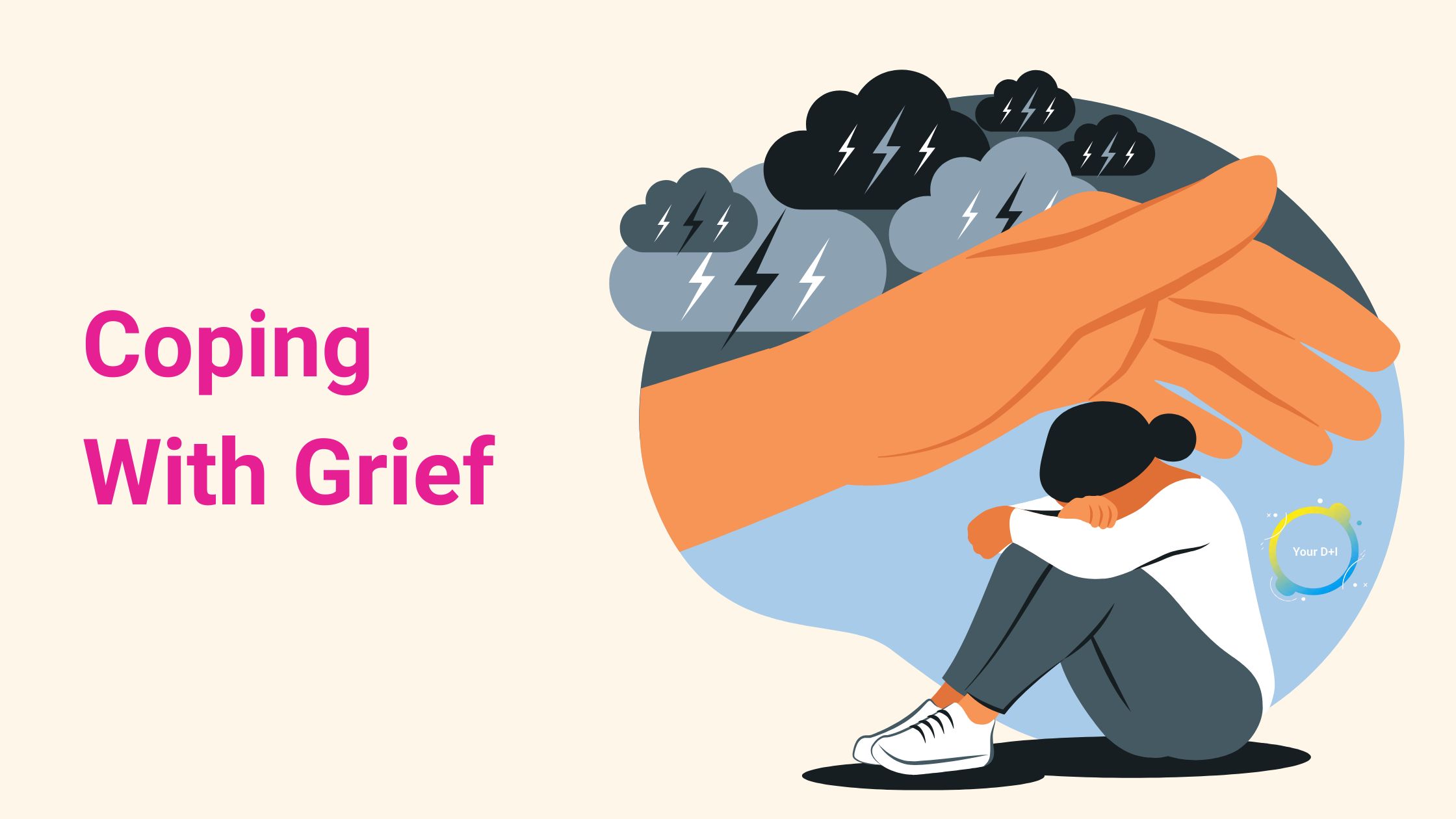
Coping with Grief: The surprising ways in which it shows up for us all

Coping With Grief is messy


We often think coping with grief follows a neat five-stage model — denial, anger, bargaining, depression, acceptance — but the truth is, real life doesn’t do neat. Grief comes in waves. Sometimes it’s a tsunami, sometimes it’s a quiet tide. Sometimes it catches you crying in the supermarket aisle because your person used to buy that brand of biscuits.

At Your D+I, we believe grief deserves better conversations — not just sympathy cards and awkward silences. That’s why we created our Coping with Grief Workshop: a space to explore loss, identity, and language with compassion and (a bit of) humour.

Before you can cope, you have to understand what kind of grief you’re carrying.

The Many Types of Grief

Below is a guide to some of the most recognised — and often misunderstood — types of coping with grief.

Normal / Uncomplicated Grief
That deep sadness that slowly softens. You still miss them, but the ache doesn’t swallow you whole forever.
Anticipatory Grief
When you start grieving before the loss happens — often during illness or decline. It’s heavy, confusing, and sometimes comes with guilt for feeling relief when the end arrives.
Complicated / Prolonged Grief
When the pain just doesn’t ease. It takes over daily life, and you might feel stuck or angry that everyone else seems to have “moved on.”
Delayed or Inhibited Grief
When you push grief away because you need to be strong for others — until one day, it comes crashing through.
Disenfranchised Grief
The unspoken kind. When your loss isn’t seen or supported by others — like the death of an ex, a miscarriage, a pet, or estrangement.
Masked Grief
When grief hides behind overworking, irritability, or chaos. You might not realise it’s grief until you stop long enough to breathe.

Situational or Specific Grief

Situational or Specific Grief
Certain situations bring their own kind of heartbreak.
Collective Grief
When a whole community or society grieves — like during a pandemic or national tragedy.
Ambiguous Grief
When there’s no closure — a missing loved one, dementia, or a friendship that fades without explanation.
Secondary Loss Grief
You’re not just grieving the person — you’re grieving everything they touched: your routines, roles, identity, future plans.
Traumatic GriefDefault Title
When the loss is sudden, violent, or shocking. Grief and trauma intertwine, making healing more complex.
Cumulative Grief
When life doesn’t give you time to recover before the next loss hits.
Exaggerated Grief
When emotions become extreme — self-destruction, rage, or recklessness.

Relational & Non-Death Grief

Breakup or Divorce Grief
When you lose someone you still love.
Estrangement Grief
Grieving someone who’s still alive but no longer in your life.
Living Loss
When a loved one is physically here but mentally or emotionally gone — through dementia, addiction, or illness.
Identity or Role Loss
When you grieve who you used to be — your career, mobility, independence, or sense of purpose.
Oppression or Collective Trauma Grief
Grief carried by marginalised groups — mourning not just people, but equality denied and harm repeated.
Survivor Guilt Grief
Feeling guilty for surviving or thriving when others didn’t.
Joy-Grief Mix
Moments of happiness laced with loss — like celebrating a wedding or birth without the person you wish could see it.
A group of people sat in an office as part of the coping with grief workshop delivered by YourDandI

What you get in the “Coping with Grief” Workshop

 Our Coping with Grief session isn’t a “sit quietly and cry” type of thing. It’s an honest, gentle-but-real look at how grief shows up in our workplaces, families, and bodies — especially when life expects us to just get on with it. We explore how to support employees with grief

We explore:
✨ The different types of grief (and how to spot them in yourself and others)
🧠 How grief affects our brains, bodies, and communication
💬 Inclusive ways to talk about loss — without awkward clichés
💪 Practical coping tools for both individuals and managers
🤝 Creating psychologically safe workplaces where grief isn’t taboo

Participants leave with clarity, compassion, and a few lighter shoulders.

There’s No “Right” Way to Grieve

Grief isn’t something to fix — it’s something to honour.
Whether your loss is loud or quiet, recent or decades old, you deserve space to name it and feel it.

If you or your team could use some guidance, space, or language around grief, get in touch.

👉 Join our next “Coping with Grief” workshop
🗓️ Dates: rolling sessions available online or in person

Get notified when we post a new blog!

When you subscribe to the Your D+I newsletter, you receive not only monthly D+I updates but also email alerts whenever we post a new blog!

Share this post with your friends

Leave a Reply

Your email address will not be published. Required fields are marked *

error: Content is protected