
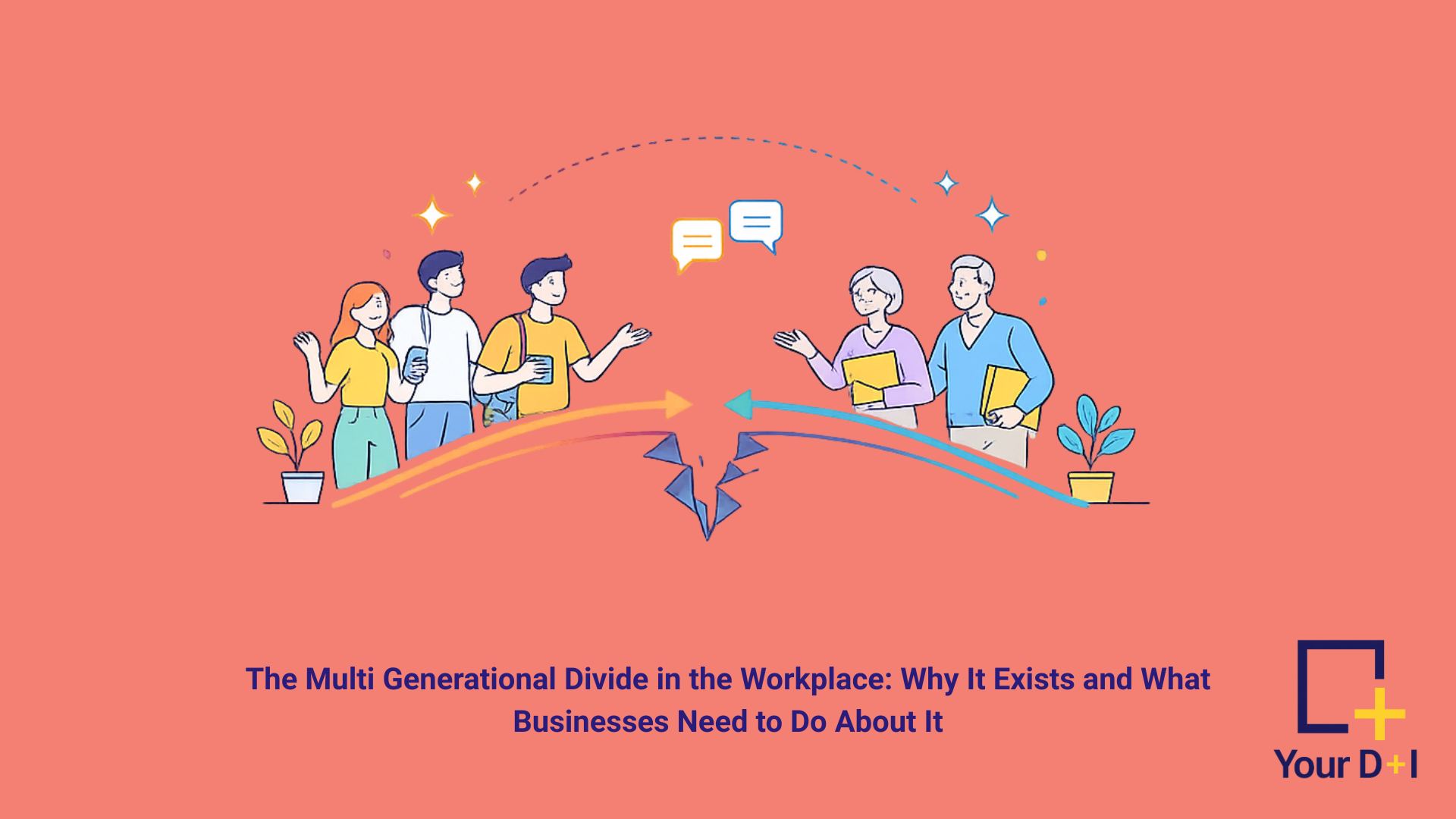
Walk into almost any workplace today and you could find a multi generational workplace. Five generations working side by side. multi generational workplaceFrom people approaching retirement who started their careers before the internet existed, to Gen Z employees who have never known a world without social media, smartphones, and instant access to information.
This should be a huge strength. Instead, it is often becoming a source of tension. Particularly when it comes to equality, diversity and inclusion (EDI).
Conversations around language, identity, allyship, gender, race, disability and inclusion can quickly become polarised. One generation accuses another of being “too sensitive”. Another accuses colleagues of being “outdated” or “unwilling to learn”.
The reality is far more complicated than that. Most people are not intentionally trying to offend others. They are often operating from completely different social, cultural and historical reference points.
Understanding that difference is the first step towards building truly inclusive workplaces.
Why Does the Generational Divide Exist?
Every generation has been shaped by different social norms, laws, media and life experiences.
Someone who entered the workforce in the 1980s experienced a very different world from someone entering it in 2026.
Consider just a few examples:
- Same sex relationships were illegal in some parts of the UK until the 1980s.
- The first disability discrimination legislation did not arrive until 1995.
- The Equality Act only came into force in 2010.
- Social media has dramatically increased visibility of marginalised communities and conversations around inclusion.
Many older employees grew up in environments where conversations about race, sexuality, disability or mental health simply did not happen.
Younger employees have often been exposed to these discussions throughout school, university, social media and popular culture.
Neither experience is inherently right or wrong.
They are simply different.
The challenge arises when people assume everyone has had the same journey.
Language Evolves Faster Than Ever
One of the biggest areas of tension is language. Words that were widely accepted twenty years ago may now be considered outdated or offensive.
Terms around disability, ethnicity, sexuality, gender identity and mental health have evolved significantly. For some employees, adapting to these changes feels straightforward.
For others, it can feel like the rules are constantly changing. This can create anxiety.
Some employees become afraid of saying the wrong thing. Others become frustrated when mistakes are made. The result is often silence. And silence is rarely where inclusion thrives.
The goal should not be perfection. The goal should be curiosity, learning and respect. Employees should feel able to ask questions without fear of humiliation, while also understanding that impact matters more than intent.
Social Media Has Changed Expectations
For younger generations, social issues are often discussed openly and publicly.
They are used to immediate conversations, rapid cultural shifts and organisations taking visible positions on social matters.
Many older employees developed professionally in environments where personal beliefs and workplace conversations were kept separate. This difference in expectation can create friction.
Younger employees may expect employers to speak out on social issues. Older employees may question whether organisations should be involved at all.
Neither position necessarily comes from a lack of care. Often it comes from fundamentally different experiences of work and society.
Different Understandings of Inclusion
Another challenge is that different generations often define inclusion differently. For some employees, inclusion means treating everyone exactly the same.
For others, inclusion means recognising that different people may need different support to achieve equitable outcomes. This distinction matters.
When conversations about adjustments, accessibility, flexible working or representation arise, people may be arguing from entirely different definitions of fairness. Without recognising this, discussions can quickly become defensive.
The Cost of Ignoring the Divide
When organisations fail to address generational differences, the consequences can be significant.
You may see:
- Increased conflict between teams
- Lower psychological safety
- Reduced engagement
- Higher turnover
- Resistance to change
- Knowledge silos
- Poor collaboration
- Increased employee relations cases
Perhaps most importantly, organisations lose the opportunity to learn from one another.
The experience and institutional knowledge of older workers is invaluable.
The fresh perspectives, technological confidence and cultural awareness of younger workers are equally valuable.
Inclusive organisations need both.
What Businesses Should Be Doing
Stop Framing It As "Us Versus Them"
The moment a workplace starts talking about “snowflakes” or “dinosaurs”, the conversation is already lost.
Generational stereotypes are no different from any other stereotype.
They oversimplify people and create division.
Focus on understanding rather than labelling.
Create Honest Conversations
Many workplaces avoid discussing generational differences because they are worried about conflict. The opposite is often true.
When facilitated properly, conversations can build empathy and understanding.
Give people the opportunity to share:
- How workplace culture has changed during their career
- What inclusion means to them
- What challenges they experience
- What they wish others understood
The aim is not agreement. The aim is understanding.
Educate Without Shaming
One of the fastest ways to lose people is to make them feel attacked for not knowing something. Inclusion learning should create confidence, not fear.
People need permission to learn. That means explaining:
- Why language changes
- The history behind certain terms
- The impact words can have
- How to recover when mistakes happen
People are far more likely to engage when they feel supported rather than judged.
Encourage Reverse Mentoring
Traditional mentoring often focuses on senior employees supporting junior colleagues. Reverse mentoring can be equally powerful.
Younger employees can offer insight into emerging social issues, technology and changing expectations.
More experienced employees can share organisational knowledge, leadership experience and historical context. Everyone learns.
Focus On Shared Values
Most employees, regardless of age, want remarkably similar things:
- Respect
- Fairness
- Belonging
- Opportunity
- Psychological safety
The language people use to describe these goals may differ.
The goals themselves are often the same.
Finding common ground is far more productive than focusing on differences.
Train Managers To Navigate Generational Differences
Managers are often the people caught in the middle.
They need the confidence and skills to facilitate conversations, challenge inappropriate behaviour and support learning across age groups.
Too many managers are expected to navigate these issues without any training.
That is setting them up to fail.
Train Managers To Navigate Generational Differences
The answer is not for one generation to win. It is not about younger employees educating older employees. Nor is it about older employees telling younger employees to toughen up.
The strongest organisations recognise that every generation brings something valuable. Experience without innovation can become stagnant. Innovation without experience can become reckless. Inclusion requires both.
If businesses want to create cultures where people genuinely belong, they must stop treating generational differences as a problem to solve and start viewing them as a strength to harness.
Because the workplaces that thrive over the next decade will not be those that cater to one generation. They will be the ones that successfully bring them all together.
If you want to know more how you can best facilitate these conversations with your teams, why not check out our workshops or fill out an enquiry from through our ‘get in touch button’ at the top of the page!